How to Choose the Right Wood Slab for Your Project in Cincinnati
Choose a wood slab by matching four things: the species that suits the project, the slab's dried moisture content, its dimensions after flattening, and the grain character you want on display.
Published
Part of our Wood Slab Sales service.
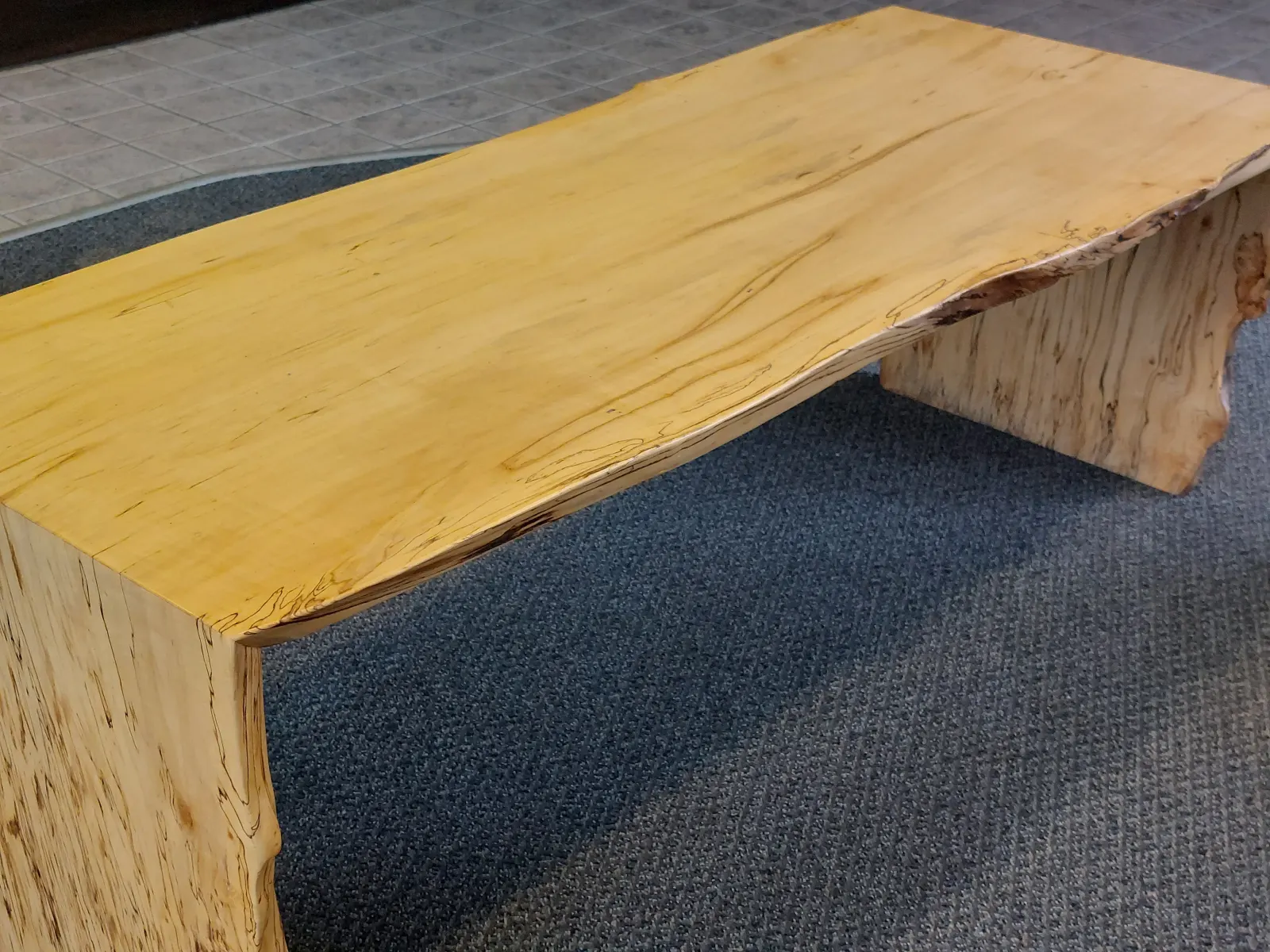
Start With the Project, Not the Slab
The right slab depends on what you are building. Before you fall for a piece of grain, write down three things: the finished piece, the loads it will carry, and the room it will live in.
Dining tables and desks take daily punishment. Spills, elbows, homework. Dense species such as walnut, oak, and maple take that kind of wear without complaint. Mantels and cabinet toppers carry almost nothing, so you can chase dramatic figure over toughness there. Benches sit in between. They bear weight but see less surface abuse than a tabletop.
Humidity matters in Cincinnati homes as well. Finished rooms cycle with the seasons, so a properly dried slab, finished on all sides, is the safe call for anything indoors. Porches and garages are different environments entirely.
Write the project down before you shop. It narrows the field fast and keeps you from carrying home eight feet of gorgeous maple that was never going to work as a coffee table. Our Wood Slab Sales page covers what is currently on the racks.
Know the Species That Work in Southwest Ohio
Most of what we cut and sell comes from local trees. That is good news for your budget and your style, because the regional species are proven.
Walnut is the benchmark. Dark, stable, machines clean, and finishes rich with almost no fuss. Oak brings prominent grain and toughness. Maple is pale, hard, and takes a modern finish well. Cherry deepens in color over the years, which some clients love and some do not. Sycamore and other salvage species show up periodically and offer unusual figure at friendly prices.
Each species has a personality. Walnut hides water rings better than maple. Oak reads rustic where walnut reads formal. Ask to see the same species finished and raw, because raw lumber lies about its final look. A coat of finish on a sample changes everything.
Torn between two options? Tell us the room and the look you want. Species selection is the most reversible decision you make. Picking wrong is cheap to fix now and expensive to fix after the table is built.
Step 1: Match the Dried Moisture Content to the Use
Moisture content is where slab projects succeed or fail. A slab milled fresh from a log can hold moisture above 30 percent. Indoors, you want it down near 6 to 8 percent before any finish goes on.
Here is the numbered check:
- Ask how the slab was dried. Kiln-dried wood is the dependable path for interior furniture. Air-dried slabs need more time at a stable reading.
- Ask for the actual reading, not a vibe. A moisture meter takes seconds.
- Ask how long the slab has rested in an indoor shop environment after drying.
- If a slab is still drying, get a realistic timeline before you plan a build date.
A slab that is not dry enough will move after you finish it. Cupping, cracks, gaps at the joinery. All preventable by waiting.
We flatten slabs and dry them properly before they are ready for a project, and we will tell you plainly when a piece is not ready yet. Patience here is the cheapest insurance you can buy.
Step 2: Measure for Finished Size, Not Rough Size
Slabs are sold by their rough dimensions. Your finished piece is smaller. Plan for that gap or you will end up short.
Begin with the finished dimensions you actually need. A table for six usually wants a top around 36 by 72 inches with 29 to 30 inches of leg clearance. A desk top might run 30 by 60. A bench is often just 14 to 18 inches deep.
Then account for what comes off:
- Flattening removes material, sometimes a quarter inch or more across the face depending on the slab's twist.
- Edges get squared even on live-edge pieces, where bark and soft sapwood come off.
- Ends get trimmed clean, cutting away checks and splits.
- Cracks may be stabilized, which can cost a few inches of usable length.
A 90-inch rough slab might finish at 82. Buy bigger than the target, not right at it.
Thickness counts too. A 2-inch slab flattens down to under 2 inches, and legs and bases have minimum thicknesses they can attach to. Bring finished dimensions to the shop and we will pull slabs that genuinely fit them.
Step 3: Read the Grain and Pick Your Character
Every slab is one of one. That is the point of live edge, and it is also why choosing feels different from picking lumber off a rack.
Look at three things. First, the figure: cathedral arches, crotch figure, burl, ribbon streaks. Second, the color contrast between heartwood and sapwood. Walnut can show a light ring against dark brown, which some people love and others want planned away. Third, the edge line itself. A long, gentle curve suits a formal dining table. A wild, jagged edge suits a rustic bar or mantel.
Then check the honest stuff. Surface checks and small cracks are normal in wide slabs and often stabilize cleanly with epoxy or butterfly keys. Ask which flaws are structural and which are cosmetic. They are not the same thing.
Photograph the slab from both faces and both ends before you commit. Step back ten feet and look at it like furniture, not lumber. The grain you fall for up close is not always the grain you want filling the room.
Step 4: Ask These Questions Before You Buy
Walk into any slab shop with this list. A good shop answers every one without blinking.
- What is the moisture reading, and was it kiln-dried or air-dried?
- What are the slab's dimensions after flattening and trimming?
- Has it been planed, or am I buying it rough?
- Are these cracks stable, or will they open up over time?
- Can you flatten and finish this slab here, and what is the timeline?
- Can I see finished samples of this species?
- What base and legs work with this thickness and weight?
The answers tell you as much about the shop as the slab. If someone cannot give you a moisture reading or a finished dimension, buy elsewhere.
For Cincinnati-area buyers, seeing the slab in person matters more than for most purchases. Photos flatten color and hide flaws. Our shop at 4450 Emerald Ave is open Tuesday through Thursday afternoons and Saturday mornings. Bring your measurements and your room photos. We will walk the racks with you.
When to Bring in the Shop Instead of DIY
Some buyers arrive with saws and ambition. Respect. But know where the line sits.
Flattening is the first wall. A wide slab needs a router sled or a wide-bed machine to get truly flat. Hand tools across a 40-inch-wide walnut slab is a weeks-long lesson in humility. We run slabs through proper flattening here every week.
Drying is the second wall. Without a kiln and a meter, you are guessing, and guessing shows up six months later as cupping on your dining table.
Finishing is the third. Food-safe, durable surfaces need the right product, sanded grit by grit, applied in controlled conditions.
The middle path works well for many woodworkers: buy the slab here, let us flatten and dry-check it, then take over the shaping and finishing. You keep the craft. We handle the industrial steps.
Not sure which side of the line your project sits on? Bring your plans in. We will tell you straight what to do yourself and what to hand off.
Ready to move forward? See our Wood Slab Sales service
Written by the Ohio Wood Connection team.
How to Choose the Right Wood Slab for Your Project in Cincinnati FAQs
What size wood slab do I need for a dining table?
A table that seats six comfortably usually needs a finished top around 36 by 72 inches, so buy a rough slab larger than that to allow for flattening and trimming. Measure your room for at least 36 inches of clearance around the table for chairs and walkways. Bring your target dimensions to the shop and we will match slabs that finish to size.
What moisture reading should a finished slab have?
For interior furniture in our climate, look for a meter reading between 6 and 8 percent. Ask whether the slab was kiln-dried or air-dried, and how long it has rested indoors since drying. If a seller cannot give you a reading, treat the slab as unfinished inventory. A wet slab will cup, crack, or open gaps after you build with it.
Which wood species is best for a first live-edge project?
Walnut is the most forgiving choice. It is stable, machines cleanly, and hides small imperfections under finish better than pale woods. Oak and maple are excellent too but show every sanding scratch. Ask to see finished samples of each species before deciding, because raw lumber rarely looks like the finished piece.
Can I buy a slab and have you flatten and finish it?
Yes. Many woodworkers buy their slab from us and let our shop handle flattening, drying checks, and finish work while they do the shaping and assembly. Others hand off the entire build. Tell us which steps you want when you pick your slab, and we will price the work that way.
Not covered here? Call the shop. Ask your question