Custom Live-Edge Table Cost in Cincinnati, OH
A custom live-edge table in Cincinnati is priced by the slab, not by a flat rate. Species, size, thickness, finish, and base all move the number. Pick your wood, then get the quote.
Published
Part of our Live-Edge Tables service.
Why Live-Edge Tables Are Priced per Slab, Not per Foot
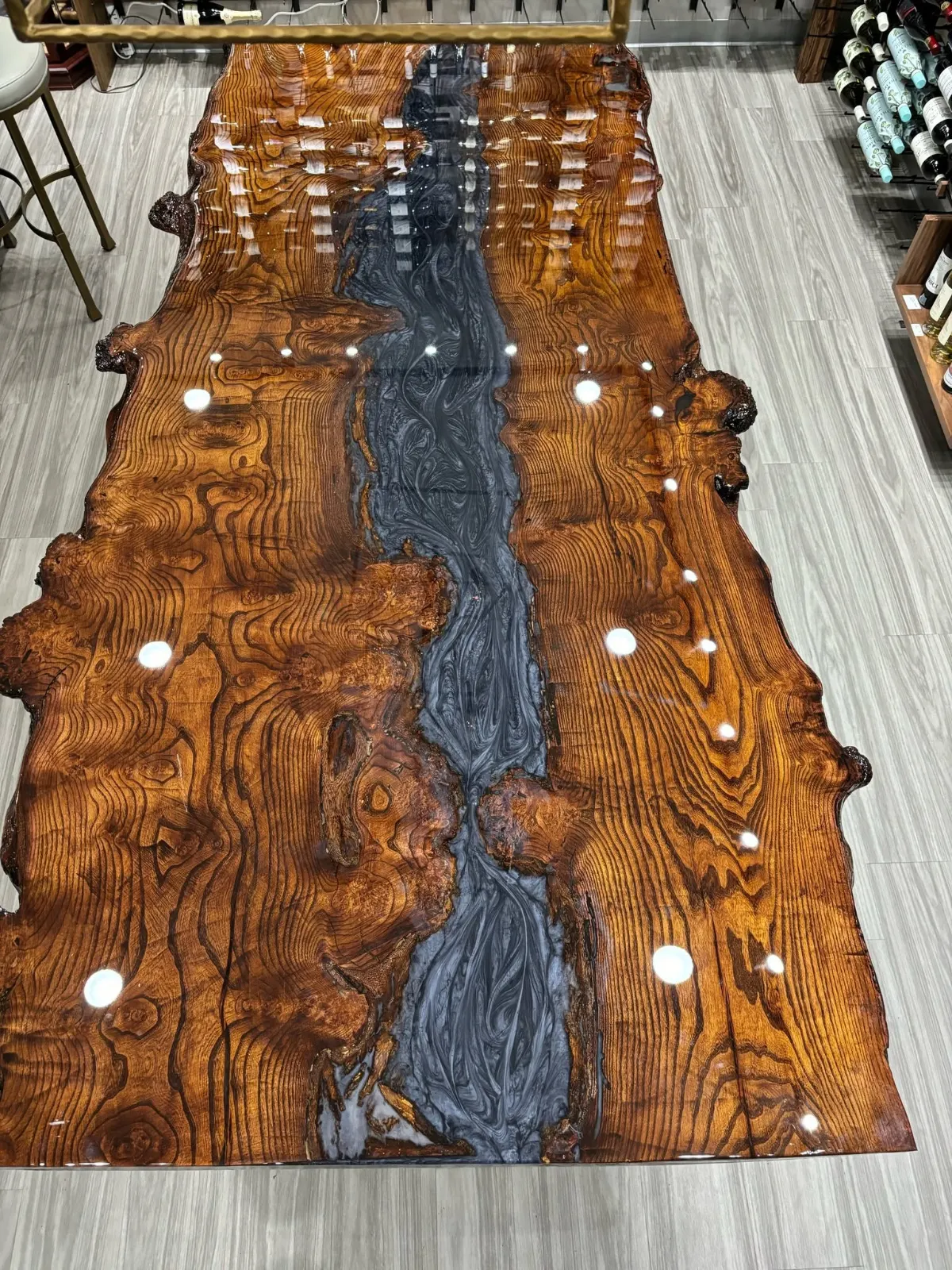
Every live-edge table starts with one slab. One tree. One cut. No two slabs carry the same width, the same figure, or the same defects, so no two tables cost the same to build. A wide walnut slab with clean, flowing edges is a different piece of raw material than a narrower oak slab with a section to work around. That is why a responsible shop will not throw out a per-square-foot number over the phone. The honest way to price your table: pick the slab first, then price the build. At Ohio Wood Connection in Cincinnati, you can walk the racks, see the grain in person, and get a quote on the exact piece of wood you want. Because the material is known before the work starts, that quote holds.
The Cost Drivers Behind a Custom Live-Edge Table
Before you compare quotes, know what actually moves the price. Here are the drivers, and why each one changes the work.
Species | Walnut, oak, maple, and other hardwoods each carry different raw material costs and different working characteristics. Rarer or wider boards of a species cost more than common cuts.
Slab size | A bigger table needs a bigger slab. Wider and longer slabs are rarer, harder to dry, and harder to mill.
Thickness | Thicker slabs take longer to kiln-dry, weigh more, and need heavier joinery and base hardware.
Drying method | Kiln-dried slabs are stable and ready to build. Air-dried material needs more prep before it is safe for furniture.
Finish | A hand-rubbed oil finish and a full catalytic conversion varnish are different processes with different durability and different labor.
Base and legs | Metal legs, trestle bases, and custom steel work each change fabrication time and hardware.
Repairs and character | Filling voids, stitching cracks, or running an epoxy river adds steps. Some character is left as-is, which can lower the work involved.
Bring this list to your first visit and the quote conversation moves fast.
How Species Choice Moves the Price
Species is the biggest lever you control. Walnut is the live-edge favorite in Cincinnati homes. Deep brown color, clean grain, and it finishes beautifully. It also carries the highest raw material cost of the common local hardwoods. Oak and maple deliver similar strength at a friendlier material cost, with lighter color and bolder grain figure depending on the cut. Cherry splits the difference in tone. Then there is character. A slab with a void or a through-crack can be filled clear, filled with colored epoxy, or worked around. Each choice changes the labor, and the material itself is priced for what it is. Salvaged slabs milled from a local fallen tree can sometimes shift the material story entirely. If species is where you want to start the conversation, our wood slab sales and wood selection help pages cover the racks in depth.
Size, Thickness, and Why the Slab Itself Sets the Floor
Measure your room before you shop. A dining table that seats six usually wants a slab in a common range of widths. A table that seats ten or a conference-scale top needs a slab that only a few trees ever produce, and the material cost reflects that rarity. Thickness works the same way. A standard tabletop thickness keeps weight and drying time down. A three-inch or thicker statement slab costs more to dry, more to move, and more to support properly. The rule of thumb: the wider and thicker the slab, the fewer exist, and the price floor rises with the wood itself. Come in with your room dimensions and seating count. The right slab gets matched to the space, not to a catalog size.
Finish and Legs: The Details That Change the Work
Two choices shape the back half of the build. First, finish. A hand-rubbed oil brings out grain and feels natural, but it asks for periodic reapplication. A harder conversion varnish resists water rings and daily family use, and it takes more spray work to apply well. Kitchens with kids and heavy dining use usually justify the tougher finish. Second, the base. Simple metal legs keep fabrication quick. A custom welded steel base, a waterfall leg, or a trestle built to match the slab adds design and fabrication time. Neither choice is wrong. Both should match how the table gets used. Talk through the room, the users, and the daily wear, and the finish and base decisions make themselves.
Timeline: What Happens Between Picking a Slab and Delivery
A custom table is a sequence, not a single task. Pick the slab. Confirm it is kiln-dried and at the right moisture content for indoor furniture. Flatten and mill it to thickness. Address any voids or cracks. Sand through the grits. Apply finish in coats with dry time between them. Fit the base. Final inspection. Each step takes real time, and drying and finishing are the long poles. Most projects run in a window of a few weeks from slab selection to a finished top, depending on the material and the finish schedule. Ask for a realistic timeline when you get your quote, not a hopeful one. A shop that dries its own lumber and flattens its own slabs controls more of that schedule in-house, which keeps surprises down.
How to Get a Straight Quote on Your Table
Skip the guesswork. The fastest path to a real number for your Cincinnati live-edge table: stop by the shop at 4450 Emerald Ave, walk the slab racks, and pick your wood in person. Bring your room dimensions, your seating count, and a sense of the finish you want. You will leave with a quote on the exact slab and build you chose, not a range built on assumptions. The doors are open Tuesday through Thursday afternoons and Saturday mornings; if those windows do not work, call (513) 581-0361 and start with the species and size you have in mind. Explore our live-edge tables page to see the range of builds, then come claim your slab.
Ready to move forward? See our Live-Edge Tables service
Related guides
Written by the Ohio Wood Connection team.
Custom Live-Edge Table Cost in Cincinnati, OH FAQs
Why can't a shop quote a live-edge table price over the phone?
Because the slab is the price. Raw material varies hugely in width, thickness, species, and character, even within one species. Until you pick the actual piece of wood, any number is a guess. A quote after slab selection is firm, because the material and the work are both known.
Is walnut worth the higher cost for a dining table?
For most Cincinnati homeowners, yes, if the budget allows. Walnut is stable, takes finish beautifully, and its color hides daily wear better than lighter woods. Oak and maple are strong alternatives at a lower material cost. Pick based on the look you want and the use the table gets.
How long does a custom live-edge table take to build?
Most projects run a few weeks from slab selection to finished table. Drying and finishing are the longest steps. Thick slabs and heavy epoxy work add time. Ask for a timeline tied to your specific slab and finish when you get your quote.
Do I need to know exactly what I want before visiting?
No. Bring your room dimensions, seating count, and photos of styles you like. Seeing slabs in person settles species, width, and character questions fast. Honest guidance on wood selection is part of the visit, and the quote follows the slab you pick.
Not covered here? Call the shop. Ask your question