How to Choose a Live-Edge Tables Company in Cincinnati
Pick a live-edge tables company that mills and sells its own slabs, kiln-dries its lumber, flattens in-house, and lets you inspect finished work in person. Nine checks below separate a real woodworking shop from a reseller.
Published
Part of our Live-Edge Tables service.
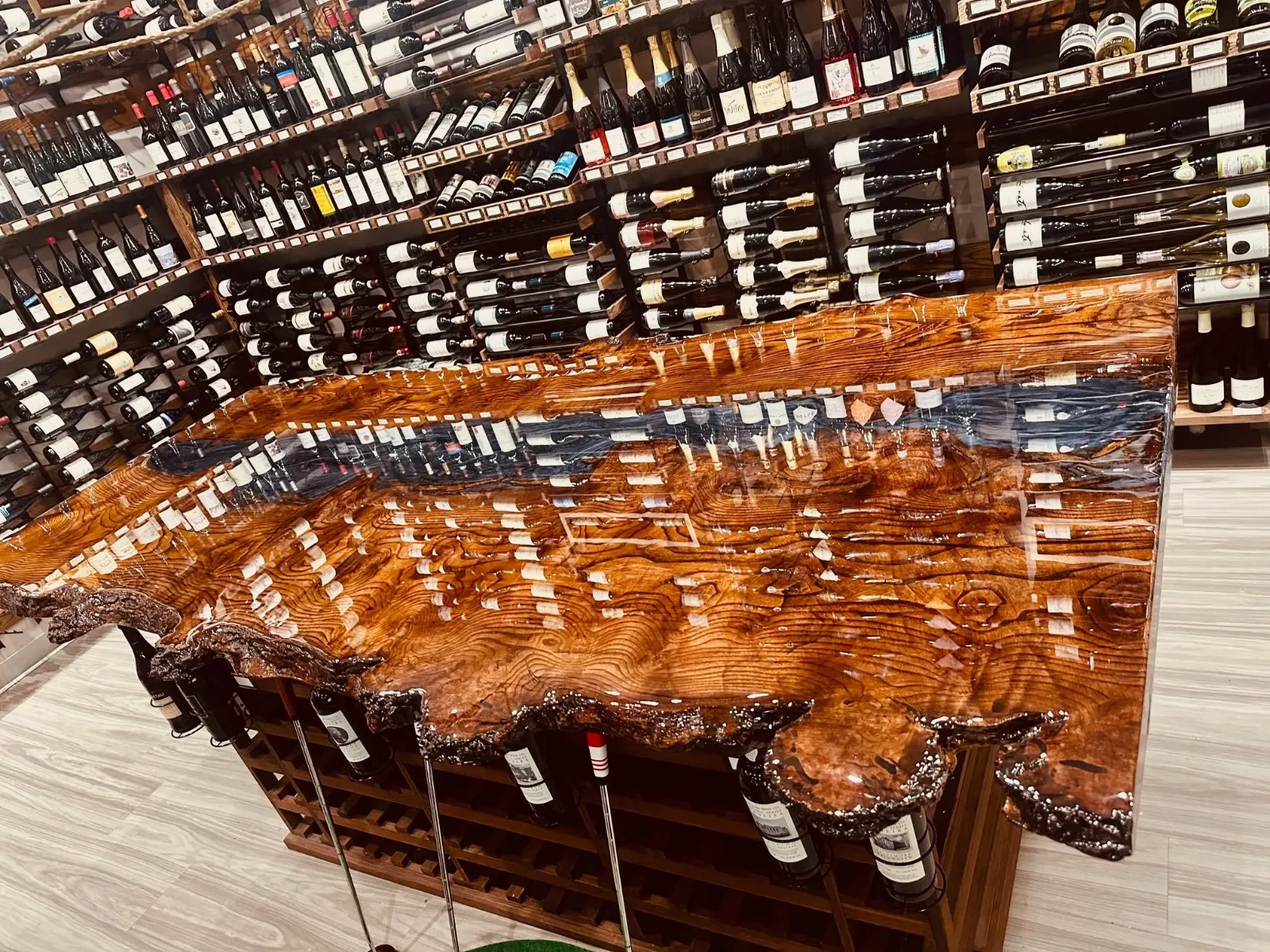
1. Do they sell the slabs themselves, or resell someone else's?
Ask where the slabs come from. A company that sources, mills, and sells its own inventory knows the story of every board: what tree it came from, how it dried, where the checks run. A reseller only knows the price tag. Ohio Wood Connection works with live-edge slabs and custom wood in Cincinnati daily, and slab selection happens in the same shop where the table gets built. That matters when you pick a walnut slab for a dining table. The person who saw the whole log knows which side shows the best grain, which edge has a void worth filling, and which board would make a better bench instead. When one operation handles slab sales, flattening, and the build, decisions stay connected. Nothing gets lost between a lumber yard and a fabricator who never met the tree. Walk the rack. Ask about specific boards. If the answers come slow or vague, treat that as information.
2. Is the lumber kiln-dried, and can they prove it?
Wet lumber is the silent killer of live-edge furniture. A top built from air-dried or unfinished stock will cup, and it will crack along the natural edge, usually months after delivery when the shop has stopped answering the phone. Ask directly: is this slab kiln-dried, and to what moisture content? A serious shop tracks moisture with a meter and will give you a number. Kiln drying also kills insects and their eggs hiding in bark and sapwood, which matters for any slab entering your Cincinnati home. The answer you want sounds like this: the slab went through the kiln, it reads six to eight percent, and it has been stickered and acclimating since. The answer you do not want is a shrug or a story about wood drying naturally in a barn. Drying is a process step, not a personality trait, so raise it on the first visit rather than at delivery.
3. Who flattens the slab, and with what?
Slabs come off the log warped. Twist, cup, bow. Every one needs flattening before a tabletop gets built on it, and the method determines whether your surface sits flat in five years. Ask what machine or jig the shop uses. Wide-belt sanders, router sleds, and proper surfacing jigs all work. What does not work is eyeballing it or gluing a slab down and hoping. Also ask whether flattening happens in-house. If the work goes to a third party, the tolerances and timelines belong to someone else. At Ohio Wood Connection, slab flattening is a listed service done where the tables are built. The same crew that flattens the slab also reads its distortion when designing the base. A twisted slab teaches them where the wood wants to move, and that knowledge goes into the build. A shop that cannot describe its flattening process in two sentences is probably not doing the work itself.
4. Can you see finished tables in person before you commit?
Photos lie about live-edge wood. Phone cameras smooth over tool marks, gap filling, and finish quality. Before signing anything, visit the shop and look at completed pieces, not just raw slabs. Check three things with your hands. First, run a palm across the finished surface. It should feel glass-smooth with no ridges or scratch haze under the finish. Second, examine the live edge itself. Loose bark, crumbling soft spots, or heavy epoxy smears over rotten wood are shortcuts. Third, look underneath. The joinery, the attachment of the base, the finish on the bottom face. Sloppy shops hide shortcuts where nobody looks. A shop in the Cincinnati area selling live-edge tables and slabs should walk you through finished work the same visit. If everything on display is a rendering or a stock photo, ask why. The best evidence of what a company builds is the piece sitting in the room with you.
5. Do they help you choose the species and slab, not just the size?
Many buyers arrive knowing one thing: a walnut table, six feet long. The right shop knows when that instinct deserves a challenge. Ask whether the company offers wood selection help. Species changes everything. Walnut darkens rich and stays stable. Oak shows bold grain and handles heavy use. Maple stays light and takes a modern look. Cherry shifts color with the room's light over the years. Then the individual slab matters more than the species. One walnut board can be dramatic and crotch-grained. Another, from the same tree, can be quiet and clean. You want a shop that lays out the tradeoffs plainly, shows you the actual slab, and tells you when your second choice beats your first. Cincinnati customers of Ohio Wood Connection mention honest guidance in reviews often for that reason. A company that only says yes to whatever you point at is taking an order, not building furniture.
6. Will they show you how the base and top connect?
The part people forget is the hardware. Wood moves with seasonal humidity, and Cincinnati swings from humid summers to dry winters. A top screwed rigidly to a base will crack around the fasteners. Ask how the tabletop attaches. The correct answer involves figure-eight fasteners, Z-clips, slotted brackets, or button hardware that lets the wood expand and contract while staying anchored. Metal leg furniture especially needs this: the legs do not move, the wood does, and the connection has to absorb the difference. Ask to see an example. Turn a table over. Look for elongated screw holes or clip hardware. If a builder says they just screw it down tight, that piece has a clock ticking on it. This two-minute question predicts whether a table you keep for decades stays solid or splits at every fastener. A shop that builds tops properly will enjoy showing you the underside.
7. Can they handle the full build in-house, from slab to finish?
Some companies sell you a slab, then hand you to a separate fabricator for legs, then a third party for finishing. Each handoff loses information and adds delay. Ask what percentage of the work happens under their roof. Ideally: flattening, milling, joinery, base building, sanding, and finishing all in one shop. This matters most when something needs adjusting mid-build. Suppose you decide during construction that you want a wider overhang, or the slab reveals a void you would rather feature than fill. A one-shop operation walks over to the slab and makes the call that day. A broker has to message someone else and wait. Ohio Wood Connection offers live-edge tables, epoxy river tables, custom dining tables, and metal leg furniture as connected services, with kiln-dried wood and slab flattening in the same list. The more of the process a company owns, the fewer surprises reach your delivery date.
8. Do they put the details in writing before deposit?
Verbal promises evaporate. Before money changes hands, get these points in writing: the specific slab, identified so you can verify it is the one you picked; the species and whether it is kiln-dried; final dimensions including thickness and overhang; the finish product and number of coats; the base style, material, and color; the hardware method connecting top to base; and the estimated completion window. None of this is complicated. A shop that resists writing it down is telling you something. Also ask what happens if the slab checks or moves before delivery. A crack in green lumber is a drying failure. A stable, kiln-dried slab should not develop new splits on the shop floor. You do not need a contract lawyer. You need a one-page summary with the slab ID and dimensions on it. Shops that build good furniture write this level of detail on their quotes as habit, because it prevents arguments before they start.
9. Do they have a physical shop you can actually visit?
Custom furniture built from a natural material deserves an in-person look before it enters your dining room. Companies operating from a website and a shipping warehouse cannot offer that. Check whether the company has a real address, a slab yard or showroom, and set hours. Then use them. Visit twice if you can: once to pick the slab, once to inspect the table before finishing. At 4450 Emerald Ave in Cincinnati, Ohio Wood Connection operates a shop where customers browse slabs and see work in progress. Walk-ins beat renderings every time. A physical location also answers the long-term question: if a bench leg loosens next year or you want a matching coffee table down the road, the company sits a short drive from Madeira, Blue Ash, or Kenwood, not a toll-free number. Local presence is not a marketing line. It is your warranty.
Ready to move forward? See our Live-Edge Tables service
Related guides
Written by the Ohio Wood Connection team.
How to Choose a Live-Edge Tables Company in Cincinnati FAQs
What should I ask a live-edge tables company before buying?
Five essentials: is the slab kiln-dried and to what moisture content, who flattens it and how, how does the top attach to the base, what finish gets applied, and can I see the actual slab and finished work in person. A shop that answers all five plainly is a safe bet.
Is it better to buy a slab and hire out the table build separately?
Usually not. When one shop flattens the slab and builds the table, the builder knows the wood's character before making the first cut. Splitting the work means two businesses guessing at each other's tolerances, and when a problem appears, each points at the other.
What timeline should I expect from slab selection to delivery?
Once you select a kiln-dried slab, most builds take several weeks: flattening, milling, base fabrication, sanding, and finishing, with drying time between coats. Kiln-dried inventory shortens the schedule dramatically compared with slabs that still need months of drying before work can begin.
Why does shop location matter when choosing a live-edge table builder?
You should see the slab before it becomes your table and inspect the finished piece before final payment. A shop you can visit in Cincinnati makes both possible, and any future repair or matching piece starts with a short drive, not a shipping claim.
Not covered here? Call the shop. Ask your question