Kiln-Dried vs Air-Dried Lumber: Which Do You Need in Cincinnati
Kiln-dried lumber is dried in a controlled oven to a low, stable moisture content. Air-dried lumber dries slowly in open air and holds higher moisture. For furniture that lives indoors, kiln-dried is the safer call.
Published
Part of our Kiln-Dried Wood service.
What Kiln-Dried Lumber Actually Means
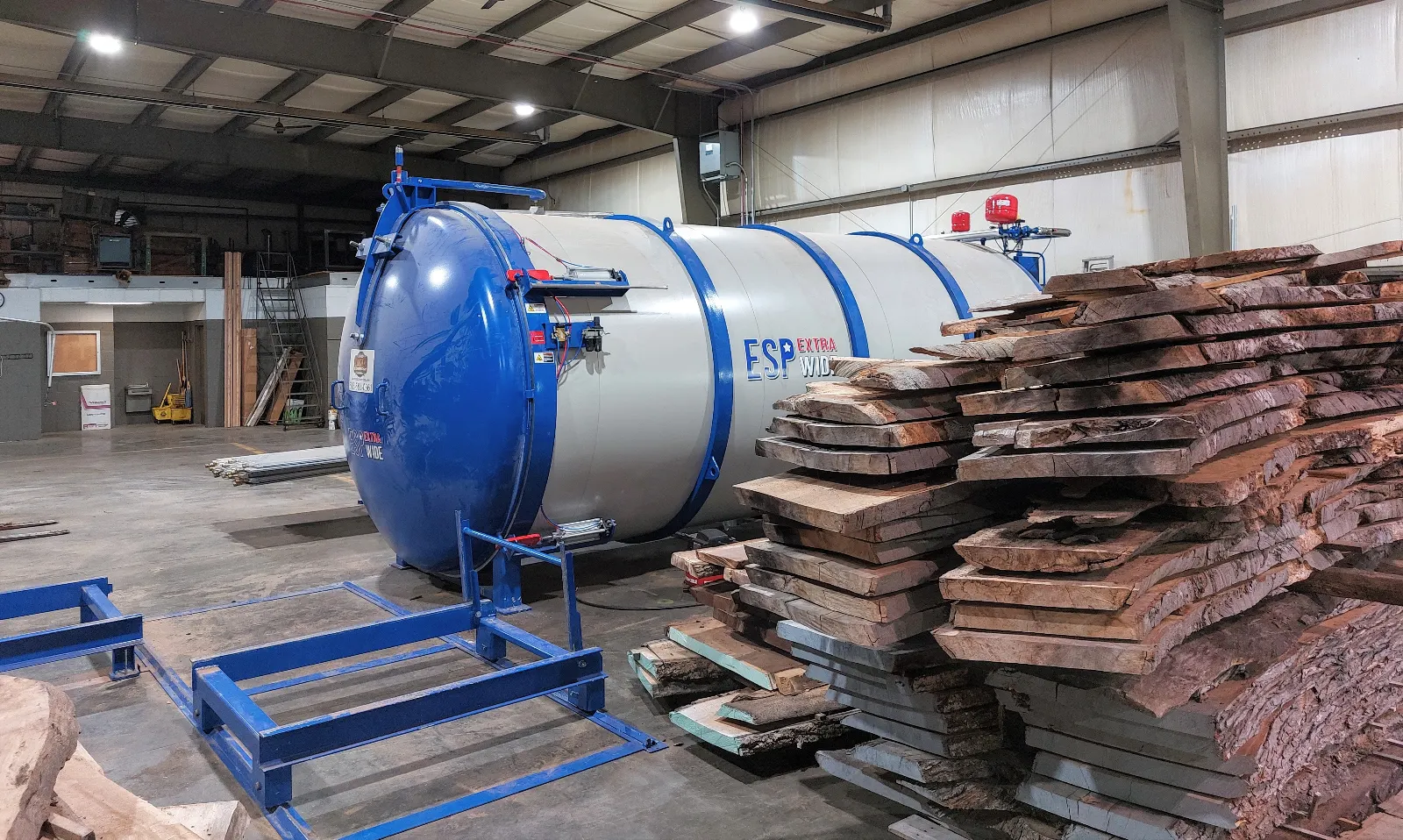
Kiln-dried lumber goes through a controlled drying process in a kiln. Heat, humidity, and airflow are managed until the wood reaches a target moisture content, usually between 6 and 8 percent for interior use.
Think of it as finishing the job. Air drying alone gets most of the water out, but the kiln removes the bound moisture held deep in the wood cells. That last stage is what stabilizes the board.
The kiln also kills insects and larvae in the wood and sets the resin in softwoods. For a slab that becomes a dining table, those details matter. Fewer surprises after the build. Less movement across the seasons.
At Ohio Wood Connection in Cincinnati, we dry our slabs properly before they ever reach the showroom floor at 4450 Emerald Ave. A customer can press a moisture meter to any board in the stack and see the number. That is the standard we sell against, and it is the standard any finished piece should meet.
What Air-Dried Lumber Actually Means
Air-dried lumber is stacked with spacers and left to dry in open air. The rule of thumb is one year per inch of thickness. A two-inch oak slab needs roughly two years before it is workable.
Air drying does real work. It removes most of the free water and prevents the worst of the immediate shrinkage. The grain also tends to keep a warmer, weathered tone that some builders want for rustic projects.
The limit is the endpoint. Air drying cannot bring wood below its equilibrium moisture content, which in the Cincinnati area hovers well above the level interior furniture needs. An air-dried board can read 12 to 15 percent moisture while your heated home sits closer to 7.
So the wood is not ruined. It is just not done. Air-dried lumber is a starting point, not a finished material. Build with it as-is and the board will keep drying inside your house, on its own schedule, in ways you did not plan for.
Why Moisture Content Decides Everything
Wood moves. It absorbs moisture in humid Ohio summers and releases it in dry winters. The question is never whether a board will move, but how much.
A board dried to 7 percent in a kiln is already matched to indoor living. It expands and contracts a little with the seasons, and a well-built piece absorbs that movement without complaint. Joints stay tight. Tabletops stay flat.
A board at 13 percent indoors wants to reach 7. It will shed that moisture by shrinking. Cupping, checking, gaps at the joints, a top that no longer sits flat on its base. All of it shows up months after delivery, long after the sale.
This is the single number that separates a table you pass down from a table you replace. Ask any seller for a moisture reading before you buy a slab. If they cannot give one, that tells you something. If the reading is above 10 percent for interior furniture, walk away.
When Air-Dried Lumber Is the Right Choice
Air-dried wood has honest uses. The trouble starts when it is sold as something it is not.
Outdoor furniture is one. A garden bench lives in the same conditions the wood dried in, so the moisture gap is small. Air-dried stock works fine there. So does rough project material where movement does not hurt anything, like a shop bench or a rustic outdoor structure.
Some woodworkers also seek out air-dried slabs for specific grain color or for projects they will finish drying themselves. That is a deliberate choice by someone with a kiln or the patience to wait.
What does not work is air-dried stock in indoor furniture sold as ready to build. A mantel over a fireplace, a dining table, a desktop over a heating vent. Those environments pull moisture out of the wood fast, and the movement shows.
Our own process air dries slabs first at the Cincinnati yard, then finishes them in the kiln. That combination keeps the grain tone slow drying produces while still reaching the low moisture content indoor furniture demands.
How Kiln Drying Changes the Cost and the Timeline
Drying is where most of the hidden work in a good slab happens. That work shows up in price and in wait time, and it is worth understanding what you are paying for.
Kiln drying takes energy, equipment, and monitoring. A slab stack needs weeks in the chamber, sometimes longer for thick stock. Moisture readings have to be checked across the pile, not just the outside boards. All of that is cost that lands in the final price.
Air-dried lumber skips the kiln bill, which is why it can look cheaper up front. But the timeline is longer in calendar years, and the risk of waste is higher. A stack that dries unevenly produces boards with internal stress. Plane them and they pinch or twist. That loss gets priced in somewhere.
Factor in the redo risk too. A cheap air-dried tabletop that cups in a year is more expensive than the kiln-dried one that never moved. Compare the total project, board price plus waste plus redo risk, and kiln-dried stock usually comes out ahead.
What Changes the Price of Dried Lumber
Drying is only one of several things that shape what a slab costs. Here are the main drivers, without any dollar figures attached:
Driver | Why it changes the work
Species | Walnut, oak, maple, and cherry each dry differently and command different prices at the log stage.
Thickness | Thicker slabs hold more moisture and need more time in air and kiln both.
Drying method | Kiln drying adds energy and equipment costs. Air drying adds time and waste risk.
Slab width and figure | Wide, highly figured boards are rarer and harder to dry without checking.
Flattening and milling | A flattened, straight-lined slab is further along than a rough one.
Kiln capacity and queue | Limited kiln space means drying schedules, and schedules mean lead time.
Waste rate | Boards lost to checking or twist during drying get priced into the boards that survive.
Ask what a quote includes before you compare prices. A slab flattened and surfaced ready to build is a different product from a rough sawn board, and the drying stage is part of that difference.
How to Decide Which One Your Project Needs
Run your project through four checks. It takes two minutes.
First, where will it live? Indoors with heat and air conditioning means kiln-dried, no debate. Covered outdoor or unconditioned space gives air-dried stock room to work.
Second, how precise is the build? A fitted desk with tight joinery needs stable wood. A rustic bench with open mortise-and-tenon joints forgives movement.
Third, what is your timeline? If you need a finished table this season, kiln-dried stock is what is ready. Air-dried lumber is a long game.
Fourth, who is doing the finishing work? If you do not own a kiln and you cannot wait a year or two, buy wood that is already done.
If your answer points to kiln-dried, come see the stack at our Cincinnati shop. We sell kiln-dried slabs by appointment and will walk you through moisture readings species by species. Bring your project dimensions and the room conditions, and we will match you to boards already at the right moisture content.
Ready to move forward? See our Kiln-Dried Wood service
Written by the Ohio Wood Connection team.
Kiln-Dried vs Air-Dried Lumber: Which Do You Need in Cincinnati FAQs
How can I tell if lumber is really kiln-dried?
Ask for a moisture meter reading and watch it being taken. Kiln-dried interior lumber should read between 6 and 8 percent. Kiln-dried lumber is also usually stamped or tagged with the kiln-dried mark. If a seller will not produce a meter or a stamp, treat the claim as unproven and buy elsewhere.
Can I air-dry a slab at home before building with it?
You can, but it is slow and unpredictable. A thick slab needs a year or more per inch of thickness, and even then it will not drop below the outdoor equilibrium moisture level. Without a kiln, you cannot bring it to the 6 to 8 percent range that indoor furniture requires. Buy dried stock instead.
Is kiln-dried wood always more expensive than air-dried?
The sticker price is usually higher because kiln drying adds real energy, equipment, and labor costs. But compare outcomes, not stickers. Air-dried lumber carries higher waste risk and a much longer wait, and furniture built from it can warp or check indoors. A kiln-dried slab that never moves is often the cheaper project overall.
Does Ohio Wood Connection sell both kiln-dried and air-dried slabs?
Our focus is kiln-dried lumber because most of our customers are building furniture for their homes. We mill and dry slabs at our Cincinnati location and can walk you through moisture readings on any board in the yard. Stop in Tuesday through Thursday afternoons or Saturday morning to see current stock.
Not covered here? Call the shop. Ask your question