Signs You Need Live-Edge Tables (and When to Call a Pro) in Cincinnati
The usual cause is mass-produced furniture: flat lines, matched sets, no wood character. A live-edge table fixes that, and slab work needs a pro once flattening, drying, or joins enter the job.
Published
Part of our Live-Edge Tables service.
What a Room That Needs Live-Edge Actually Looks Like
The room works. Nothing in it feels made.
The dining set arrived in one delivery. The coffee table, side chairs, and console all share the same finish and the same flat, machined edge. Run your hand across anything in the room and it feels identical. No grain. No figure. No story.
This happens because most furniture is built to ship cheap and stack flat. Factories remove wood character on purpose. It costs nothing to sand out.
Ohio Wood Connection hears it from Cincinnati homeowners constantly: the space is done, the budget was spent, and the room still reads generic. The fix is rarely a remodel. It is one honest slab, sized to the room, with an edge the tree grew on its own.
Your Dining Room Furniture All Matches
A matched set is convenient. It is also the clearest sign the room has no anchor.
When table, chairs, and hutch all come from the same collection, the eye has nowhere to land. Every line repeats. Every finish copies the next. Guests notice the room, not a single piece in it.
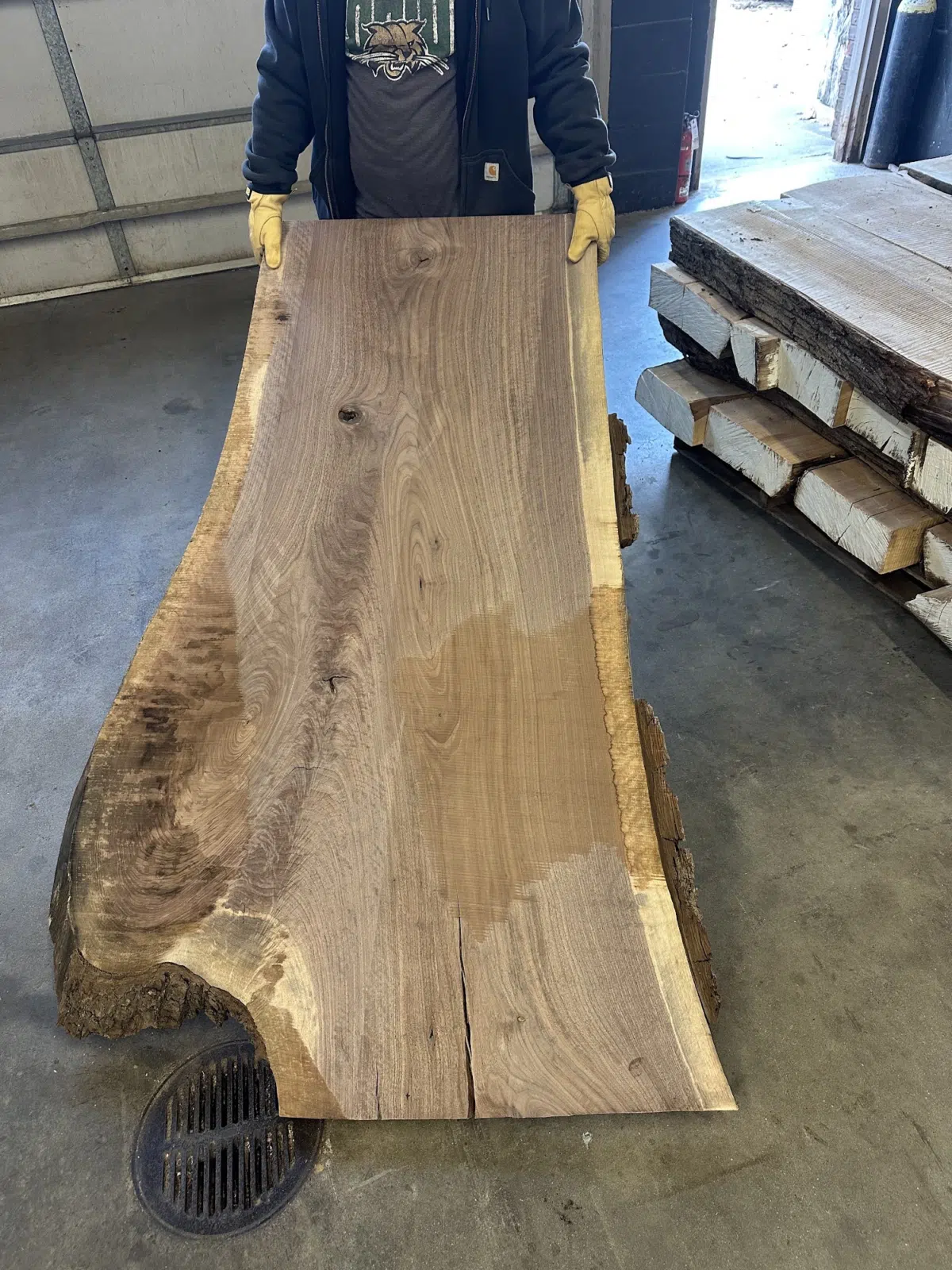
One live-edge table breaks that pattern without fighting it. A walnut top with a natural edge next to your existing chairs adds contrast a catalog set cannot manufacture. The grain does the work. You do not have to redecorate around it.
Check your room for this. Count how many pieces came from the same box store trip. Three or more is a strong signal the room is waiting on one origin piece.
Simple Checks to Run Before You Commit
Walk the room with these before you shop.
- Measure the space, not the furniture you own. Note the length, width, and clearance you need to walk around the spot.
- Count the matched sets. Three or more pieces from one collection means the room lacks a focal point.
- Check the current table's build. Thin veneer, particle board, or loose legs mean it is near the end of its life.
- Look at the light. A slab under a window reads differently than one under a pendant. Note where daylight hits first.
- Ask who uses the room daily. Family meals need thick tops and a finish that survives plates and elbows.
- Decide what the wood should say. A slab with local history changes a room more than another import.
Standard Table Sizes Do Not Fit Your Space
Rooms in older Cincinnati homes rarely match catalog dimensions. Long narrow dining rooms. Odd alcoves. Window seats that eat into wall length. A six-foot box store table either crowds the walkway or floats lost in the middle of the floor.
Live-edge solves this differently than most furniture. Because every slab is a single board, the piece gets built to the room, not the other way around. A narrow maple top fits a tight breakfast nook. A wide walnut slab anchors a great room.
If you measured and nothing standard fits, that is the sign. Custom sizing is not a luxury here. It is the requirement, and slab work is built for it.
Your Current Table Cannot Survive Daily Use
Most mass-produced tables are skin over sawdust. The top is a printed veneer a fraction of a millimeter thick. Once it chips or swells, there is nothing to sand back to.
Check yours. Look for peeling edges, bubbling surface, water rings that never fade, legs that wobble past tightening. Any of these means the table is finished as a working piece.
A live-edge slab is the opposite build. One thick board of solid hardwood. Dents sand out. Scratches buff. The top can be refinished decades from now instead of replaced. If your household eats, works, and homework-es at that table every day, the wear curve matters more than the initial price.
The Room Has No Focal Point
Sit in your dining room and look for the thing your eye hits first.
Often the answer is nothing. A light fixture, maybe. A wall. Rooms without a focal point feel unfinished even when the furniture is new.
A live-edge table gives the room its center. The natural edge draws a line across the floor. The grain holds attention the way flat surfaces cannot. Center the piece under your light and the whole room organizes around it. Chairs, rug, and art stop competing and start supporting.
This is why designers reach for slabs first. One piece with real wood character does the job a full room of accessories cannot.
When to call a pro
Some parts of a live-edge table never belong in a garage workshop. These findings mean the job has moved past do-it-yourself.
The slab is still wet or not kiln dried. Wood at high moisture will cup and crack after you build. It needs controlled drying first.
The board is twisted, cupped, or crowned. Flattening a wide slab takes a CNC bed or a wide drum sander, not a hand planer and hope.
The design includes epoxy. River fills need a level, sealed mold and resin that cures right. Mistakes are permanent and expensive.
The base is metal. Welding, level feet, and proper attachment points decide whether the table rocks for the next thirty years.
Bring your measurements or your raw slab to Ohio Wood Connection at 4450 Emerald Ave in Cincinnati, or call (513) 581-0361. See the slabs in person. Walk out with a plan.
Ready to move forward? See our Live-Edge Tables service
Related guides
Written by the Ohio Wood Connection team.
Signs You Need Live-Edge Tables (and When to Call a Pro) in Cincinnati FAQs
Can I turn a tree from my own yard into a live-edge table?
Often, yes. The log needs to be milled into a slab, dried to a stable moisture level, then flattened before any building starts. A pro can tell you within minutes whether your tree holds a table inside it. Salvage milling and kiln drying are services that exist for exactly this, so do not write the tree off as firewood before asking.
How do I know a slab is dry enough to build a table from?
Moisture content, not feel, decides it. Wood that still carries excess moisture will shrink, cup, and crack after construction. Kiln-dried slabs are the safe choice for furniture that lives in a heated Cincinnati home. If a seller cannot tell you how the wood was dried, treat that as a stop sign.
Will live-edge work in a modern or minimalist room?
Yes, and it is one of the best pairings available. Clean walls and simple lines make the wood's natural edge stand out more, not less. Choose a slab with a tighter edge and a darker species like walnut if you want restraint. The table becomes the one organic element the room is missing.
Live-edge table or straight-edge hardwood table: which fits my room?
Pick straight-edge if your room leans formal or you want chairs to tuck tight together. Pick live-edge if you want the piece to carry character and serve as the room's focal point. Both start as solid hardwood slabs. The difference is whether the tree's natural edge stays visible or gets milled flat.
Not covered here? Call the shop. Ask your question