DIY vs Professional Live-Edge Tables: What's Worth It in Cincinnati
A DIY live-edge table works when you already own flattening tools and have dry, flat wood. A professional build pays off for large tops and lasting heirlooms.
Published
Part of our Live-Edge Tables service.
Building a Live-Edge Table Yourself
DIY starts with the slab. You need wood that is already kiln-dried and flat, or the tools to flatten it. A router sled, a drum sander, and a long level are the baseline. Skip that step and the tabletop will cup within a season. Ohio Wood Connection wrote this guide for customers in Cincinnati.
Then come the decisions DIYers underestimate: how to fill a natural void, when to leave bark on, how to attach legs so the top can move with humidity. None are hard to learn. All are easy to get wrong on a slab you cannot replace.
The upside is real. You keep the whole budget in materials. You learn your wood. And a first table you built yourself carries a story no shop can sell you.
Ordering a Live-Edge Table From a Professional Shop
A professional build starts before the cut. The shop knows which species hold up in an Ohio dining room, which slabs have hidden checks, and which grain patterns will look right at finished width.
Then the work: controlled flattening, void filling, joinery that lets the top move with seasonal humidity, sanding through progressive grits, and a finish chosen for how the table is actually used. Kids, dogs, hot plates. That last part is where most DIY finishes fail.
You also buy the fixes before they happen. A warped top, a cracked tenon, a finish that clouds over a year. A built-to-last table costs more up front and less over its life. Ohio Wood Connection builds each one around the slab you pick.
Where DIY Really Does Make Sense
Some projects are genuinely better DIY. Smaller tops with modest expectations, a bench or a nightstand, a coffee table where slight unevenness reads as character. If you already own the flatten-and-finish gear, your only real spend is the slab.
Woodworkers around Cincinnati also do hybrid builds: buy a flattened, kiln-dried slab from us, then do the base, legs, and finish at home. That splits the work at the point where shop equipment matters most.
Honest test: if you can flatten the slab true and you have a garage that stays above freezing for finishing, DIY is worth it. If either answer is no, the project stalls, and stalled projects rarely end in a table.
Where a Professional Build Pays Off
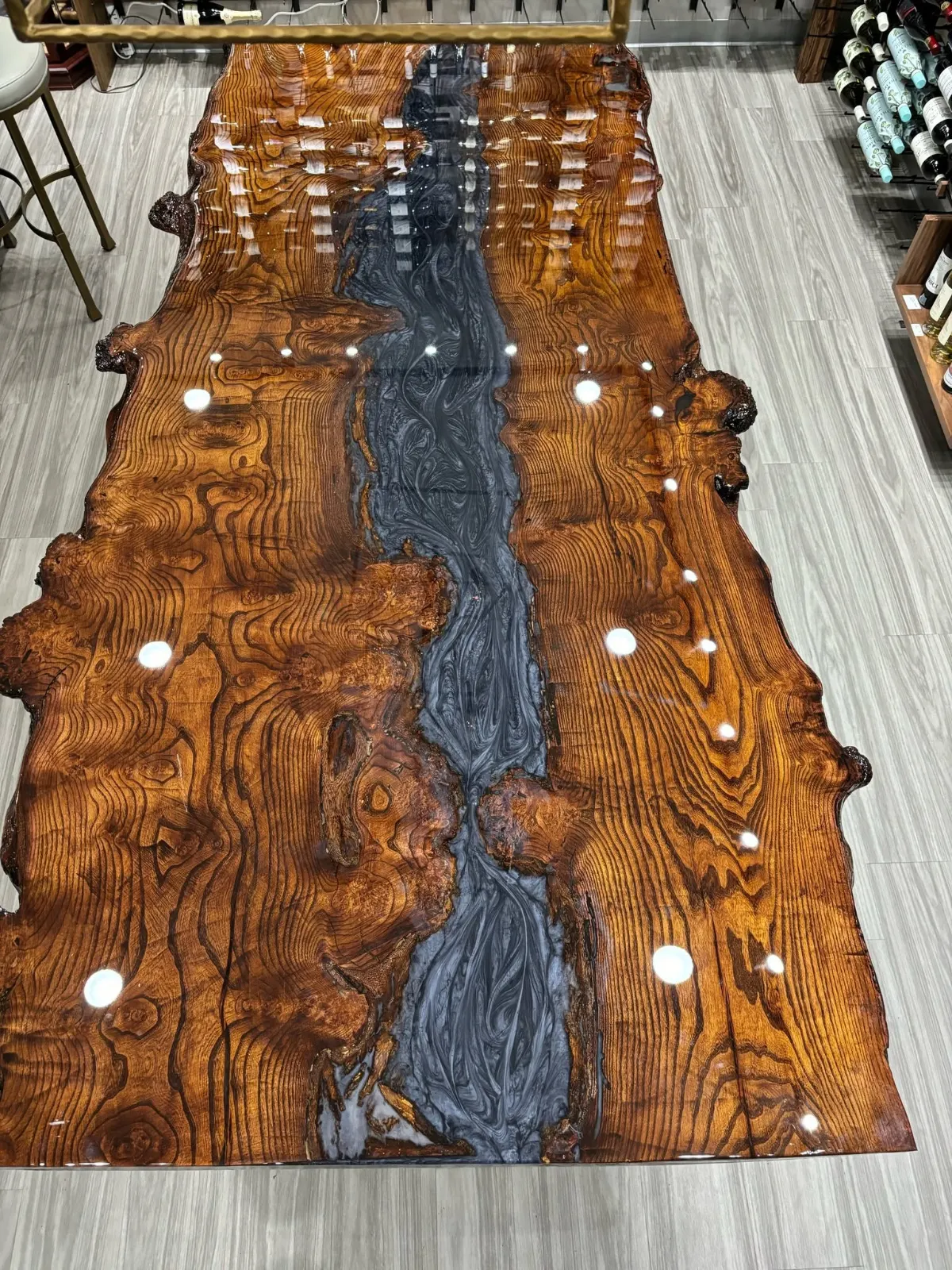
Large tops are the clearest pro case. A long dining table needs a stable glue-up or a single wide slab, both hard to manage without a flattening rig and proper drying control. Bookmatched pairs, epoxy river fills, and fine finish work follow the same logic.
The second pro case is certainty. You are furnishing a home you plan to stay in, or you want the top to match a mantel, countertop, or bench already in the room. Matching species, tone, and edge character across pieces is a shop job.
If you have been collecting slabs but no table has appeared, that is the signal. Send us your design and we will finish it.
How to Choose Between DIY and a Professional Build
| Factor | DIY | Professional build |
|---|---|---|
| Equipment needed | Router sled, sander, finish space | Shop handles everything |
| Risk of warp or crack | Carried by you | Carried by the shop |
| Time to finished table | Weeks to months | Set schedule |
| Design control | Total, including mistakes | Total, with guidance |
| Best fit | Small tops, hybrid builds | Dining tables, matching sets |
DIY tends to fit smaller tops, woodworkers with tools, and hybrid builds where a shop flattens the slab and you finish the base. A professional build tends to fit dining tables, bookmatched or epoxy work, and anyone matching existing pieces in the room. How long you plan to keep the table is the deciding factor: for a piece meant to outlive a decade, the shop carries the risk better than a first-timer can.
Start With the Slab Either Way
Both paths run through the same first stop: the slab inventory. Pick your wood at our Cincinnati yard, and we can tell you honestly whether it suits DIY or a shop build. We sell kiln-dried slabs, flatten tops to spec, and build full tables from the same stock.
Bring rough photos or dimensions. We will point you at species that hold up, flag checks or voids before you commit, and quote flattening if you want the hybrid route. One visit settles which path is worth it for your project.
Ready to move forward? See our Live-Edge Tables service
Related guides
Written by the Ohio Wood Connection team.
DIY vs Professional Live-Edge Tables: What's Worth It in Cincinnati FAQs
Can a beginner build a live-edge table?
Yes, for smaller tops like benches and coffee tables, especially if the slab arrives flattened and kiln-dried. Large dining tables demand flattening equipment, humidity-aware joinery, and finish control, which is where most first builds go wrong. A hybrid approach, slab prepped by a shop and base built at home, is a common middle path.
What part of a DIY live-edge table goes wrong most often?
Flattening and finishing. An uneven top shows up the moment light crosses it, and a rushed finish clouds, scratches, or peels within a year of dining-room use. Both failures trace back to equipment most garages lack, which is why many builders buy pre-flattened slabs and finish outdoors in warm months.
When should I just have Ohio Wood Connection build the table?
When the top is wide, the piece must match other furniture, or the table needs to last for decades without surprises. A shop controls drying, flattening, joinery, and finish in one place, so the risk of warp or crack sits with us rather than with you. Bring your dimensions and slab preferences and we will scope it.
Not covered here? Call the shop. Ask your question