How to Choose the Right Slab Flattening Company in Cincinnati
A good flattening shop checks moisture, has a bed that fits your slab in one pass, and agrees on final thickness before cutting. Ohio Wood Connection offers slab flattening as a core service.
Published
Part of our Slab Flattening service.
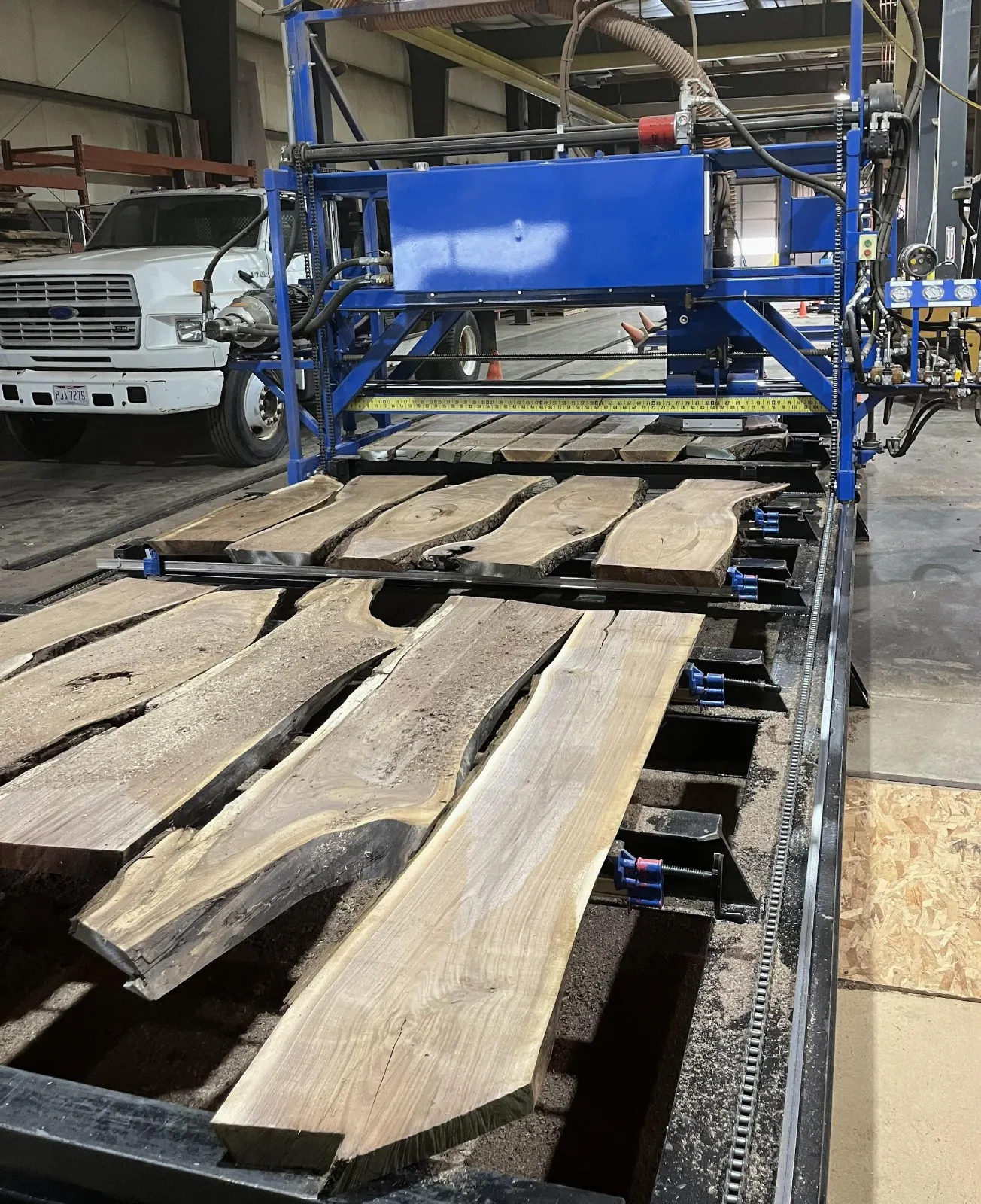
What Slab Flattening Actually Does to a Rough Slab
A slab straight off the mill carries saw marks, and the wood keeps moving as it dries. Cupping pulls the edges up. Twist lifts one corner off the bench. A flattening pass cuts one face down to a single true plane, then brings the opposite face parallel so the board sits at an even thickness from end to end.
That even thickness is what everything else builds on. Table legs bolt tight. Metal bases stop rocking. An epoxy pour levels evenly instead of pooling in the low spots. A cabinet top sits flush against the cabinet run.
The pass has limits, though. Every cut removes wood, so a shop that takes too much chases a twist into the live edge and shrinks the board you picked. A shop that takes too little leaves high spots that show up when you set a level on the finished top. The difference comes down to the shop, not the machine. Anyone can rent a sled. Not every shop reads the grain, checks the moisture, and stops the cut where your project needs it to stop.
How to Choose a Slab Flattening Company: Step by Step
Choosing a flattening shop comes down to a short checklist. Work it in order, and each step filters out shops that cannot protect your board.
- Start with the wood. Know the species, the dimensions, and whether the slab is kiln-dried or still air-drying. Any flattening shop will ask for these first.
- Look at finished work. Ask to see slabs that have come off their bed, not just photos of raw stock. Finished tabletops and tops in progress tell you more than a sales pitch.
- Ask what does the flattening. A dedicated wide bed, a router sled rig, or a CNC bed all get the job done. What matters is how the shop verifies flatness when the pass ends.
- Confirm the bed handles your size. Long dining slabs and wide mantel blanks need support in one setup. A board flattened in sections can end up with a ridge down the middle.
- Agree on final thickness before the board goes on the bed. Say what you are building. A dining top, a bar top, and a shelf each tolerate different thicknesses.
- Ask how the result gets checked. A straightedge, winding sticks, and a moisture reading should all be part of the answer.
- Visit if you can. Several shops around Cincinnati flatten slabs. Bring photos of the project the board is headed for, so the shop sees the end use along with the slab.
Questions to Ask Before You Hand Over Your Slab
Hand over the board only after these answers are on the table.
What final thickness will the slab end at, and how much margin is left above that for sanding? How do you verify flatness across the full length? Do you read moisture content before the pass, and what happens if the slab is still moving? What surface do I get back: mill-clean, planed, or sanded to a grit I can finish from? If the slab checks or shifts after the pass, how do you handle that?
The answers show you how the shop works. A careful shop reads the moisture at drop-off, agrees on a target thickness, and writes both down before the board moves. A shop that shrugs at the moisture question may flatten a wet slab, and the twist will come back as the wood dries.
Watch for one more sign. The shop should ask about your project before agreeing to the work. A dining top, a bar top, and a mantel put different demands on the same board. If the questions only run one direction, the shop is treating your slab as stock instead of as the one-of-a-kind board it is.
Mistakes That Ruin a Good Slab
Most slab damage happens before the board reaches a bed, and the rest happens when the wrong shop handles it. Four mistakes to avoid.
Flattening too early. A slab that is still drying will cup again after a perfect pass. Flatten after the wood has settled, or plan on a second pass later.
Chasing the twist too deep. A heavy twist can be removed, but only if enough thickness remains above it. Measure the high point to the low point before any cutting starts.
Ignoring checks and cracks. End checks and splits can often be stabilized, but only if the shop knows about them. Point them out at drop-off instead of hoping they get noticed on their own.
Hiring a general handyman for the job. Flattening takes a wide bed and a controlled cutter path. A surface that feels smooth but is not flat will still rock on its base, and the mistake only shows after the finish goes on and the legs are bolted down.
When a Slab Needs a Professional Flattening Bed
Small, narrow stock can be flattened at a home shop with a router sled and patience. A full dining slab is a different job. Wide white oak, long walnut, and mantel-size blanks need a bed that supports the whole board and a cutter path that covers the full width in controlled passes.
Call a professional when the slab is wider than your sled, longer than your bench, or headed for a project that cannot tolerate a rock. Live-edge countertops, dining tables, desk tops, and anything going under an epoxy pour all fall in that group.
The risks stack up on big boards. A ridge from a partial pass cannot be sanded out. A slab supported badly on a small bed can flex during the cut and come off no flatter than it started. A wide slab twisted past a certain point needs a shop that can measure what is left before committing the cut.
When you call a shop, lead with the species, the width, the length, and the moisture reading if you have one. Ask for the target thickness in the same conversation.
Slab Flattening in Cincinnati: What to Expect From Us
Slab flattening is a core service at Ohio Wood Connection, alongside slab sales, kiln-dried stock, and custom building. Homeowners and woodworkers around Cincinnati bring us boards that rock, twist, or carry years of drying movement.
Here is how a drop-off works. We read the moisture first, measure the twist, and tell you what a pass can and cannot do for that specific board. Then we agree on the final thickness for the project it is headed for, whether that is a dining top, a mantel, or a cabinet topper. No cutting starts until those numbers are settled.
Bring the slab in, or send photos first if you are still deciding. The shop sits at 4450 Emerald Ave in Cincinnati, and the full scope of the work lives on our Slab Flattening service page. Call (513) 581-0361 and talk through your board before you load the truck.
Ready to move forward? See our Slab Flattening service
Written by the Ohio Wood Connection team.
How to Choose the Right Slab Flattening Company in Cincinnati FAQs
How flat does a slab need to be before I build on it?
Flat enough that it does not rock on its base, and parallel enough that joinery and fasteners sit tight. Table bases and metal legs forgive less than most people expect. A shop that does this work checks with a straightedge and winding sticks across the full length before calling the pass done.
Can a twisted slab be flattened without losing the live edge?
Most twisted slabs can be flattened with the live edge intact. Flattening works on the faces, so the bark line stays untouched. The real limit is thickness: a deep twist needs more material removed to reach a true plane. Bring the board in and we will measure what is there before any cut, then tell you what is left to build with.
Should a slab be dried before it is flattened?
In almost every case, yes. Wood that is still drying will move after a perfect pass, and the cup or twist can return. Kiln-dried slabs are ready to flatten right away. Air-dried boards need a moisture check first, so the shop can tell you whether the slab has settled enough to hold a pass.
How much thickness does a flattening pass remove?
It depends on the board. A lightly cupped slab gives up very little. A badly twisted one loses more, because the cutter has to reach the high points across the whole face. Bring the slab by the shop at 4450 Emerald Ave or call (513) 581-0361 for the exact figure on your wood.
Not covered here? Call the shop. Ask your question