How to Pick a Kiln-Dried Wood Company in Cincinnati, OH
A good kiln-dried wood supplier meters individual boards, states drying targets, labels species honestly, and stores stock properly. Ohio Wood Connection in Cincinnati meets each of those checks.
Published
Part of our Kiln-Dried Wood service.
Why the Supplier Decides Whether Kiln-Dried Wood Works
Kiln-dried wood is a claim about moisture, stability, and cleanliness. The kiln makes the claim. The company holding the boards decides whether it holds.
Drying done well ends with stock at a low, even moisture content, stacked flat, kept indoors, and labeled truthfully. Drying done loosely ends with boards that read right on the stack surface and move a month after your tabletop is glued up.
Cincinnati has no shortage of lumber for sale. What separates a furniture-grade source from a general yard is discipline after the kiln cycle ends: measurement, storage, and honest labeling. Those three habits are what the rest of this guide helps you verify.
What to Verify Before You Spend a Dollar
Three facts tell you almost everything about a supplier's stock.
Moisture content. Ask what the boards read and insist on a meter check on the boards you actually intend to buy. For interior furniture work in Cincinnati homes, the target range is roughly 6 to 8 percent.
Drying method and endpoint. Kilns run to different targets depending on species and thickness. A thick white oak slab dries on a different schedule than thin poplar. A supplier who can explain that difference knows their kiln.
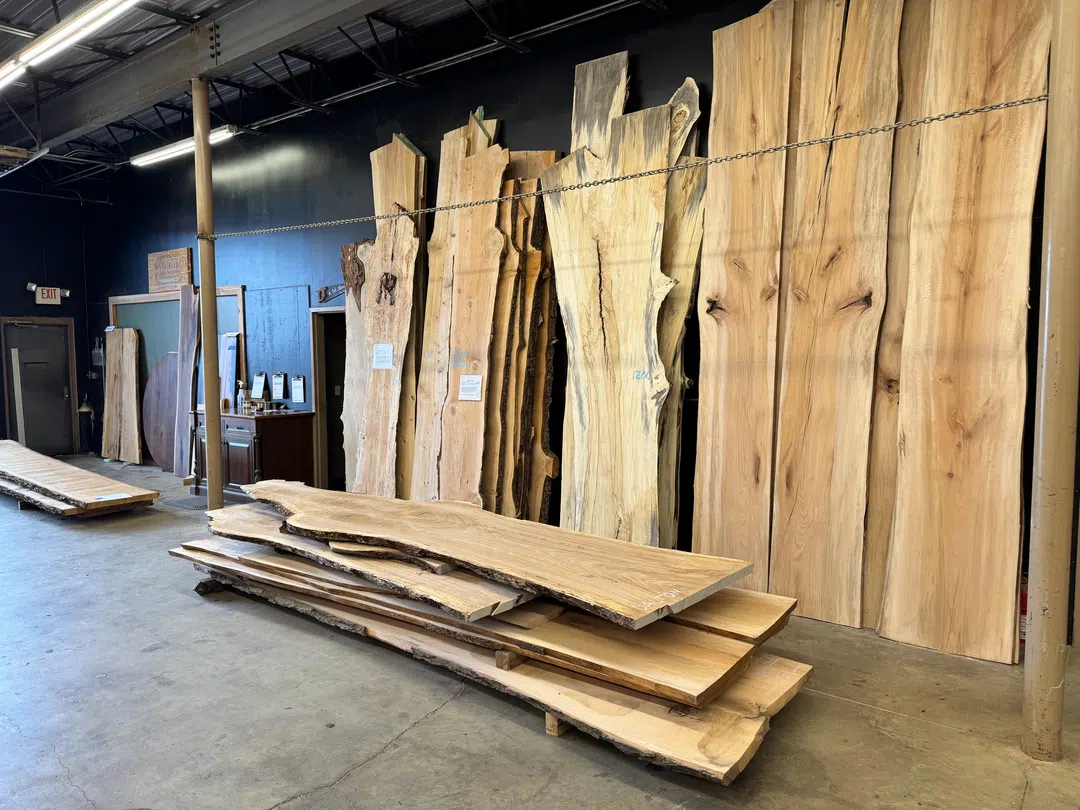
Storage after drying. Kiln-dried boards that rest on damp concrete or sit outdoors reabsorb moisture and lose the benefit. Stock should be flat, stickered, and under cover.
Ask all three up front. The answers, or the hesitation, tell you where to buy.
How to Vet a Kiln-Dried Wood Company, Step by Step
Work through this sequence on a visit or a phone call.
- Request a moisture reading on the specific boards you want, taken with a meter in front of you.
- Ask what moisture target the kiln runs to for interior work, and listen for an answer tied to furniture, not lumber in general.
- Ask where the wood originated. Local salvage, regional hardwoods, and imported stock each tell a different story about grain and sourcing.
- Walk the storage. Look for boards stacked flat, separated by stickers, off the floor, and indoors or under cover.
- Check the species labels. Each stack should carry a real species name, not a vague hardwood tag.
- Inspect end grain and faces for checking, cupping, or defects nobody mentioned.
A supplier who clears all six is one you can build from.
Questions Worth Asking Before You Commit
Beyond the walkthrough, put these questions directly.
Can I meter-check the exact boards I am buying? An immediate yes is the strongest signal a supplier can give.
How long since these boards left the kiln, and how were they stored since? Freshly dried stock is fine. Stock that got wet after drying is not.
What does this board suit? Tabletop, mantel, shelving, bench. Thickness and species should match the answer.
Will you make it right if the label is wrong? Mislabeling happens in the trade. What matters is how the supplier responds.
A good yard also pushes back. If you are building a dining table for a home in Montgomery or a mantel in Blue Ash, the right supplier will talk you out of a board that will not hold up in that spot.
Matching the Wood to Your Project
The right supplier with the wrong species still gives you a failed build. Match the wood to the work first.
White oak suits tabletops and countertops. Dense, rot-resistant, and it takes finish beautifully. Walnut brings deep color to desks and mantels. Maple and ash handle hard daily use. Cherry warms and darkens over years.
Thickness matters as much as species. Live-edge tables and countertops want thicker slabs than shelving or toppers. Ask what each stack is suited for, not just what it is.
If you are unsure, bring the project to the wood instead of the reverse. Describe what you are building, where the piece will sit, and how hard it will be used. A knowledgeable supplier narrows a full stack down to the few boards that genuinely fit.
When a Professional Helps Most
Bring in professional help when the stakes outgrow the stack.
You are building furniture that must stay flat: a dining table, a countertop, a mantel over a working fireplace. You are buying a wide, thick slab where one moisture mistake costs the entire board. You are salvaging a tree from your own property and need it milled, dried, and finished into something usable. Or you simply cannot meter-check on site and need a supplier who will do it for you.
Ohio Wood Connection kiln-dries wood in Cincinnati, sells slabs and lumber, flattens slabs, and builds custom furniture from the same stock. One yard, one standard, from the drying cycle to the final coat. Call (513) 581-0361 or visit 4450 Emerald Ave to walk the stacks and match boards to your build.
Ready to move forward? See our Kiln-Dried Wood service
Related guides
Written by the Ohio Wood Connection team.
How to Pick a Kiln-Dried Wood Company in Cincinnati, OH FAQs
What moisture content should kiln-dried wood have in Cincinnati?
For interior furniture and cabinetry, aim for 6 to 8 percent moisture content. That range matches the humidity wood sees inside Cincinnati homes across the seasons. Wood dried well above that will shrink and move after it becomes a table or mantel, so always meter-check the specific boards you plan to buy rather than trusting a stack average.
Can I check the moisture content myself before buying?
Yes. A pin or pinless moisture meter gives a reading in seconds, and most reputable suppliers will meter-check boards with you on site. Ask for readings on the exact boards you are buying, and note that very thick slabs can read differently near the core, which is a fair question to raise.
Is kiln-dried wood always better than air-dried?
For interior furniture, kiln-dried is usually the better call because it reaches lower, more uniform moisture and kills insects and fungi along the way. Air-dried stock can suit outdoor projects and certain rustic work. The right choice depends on thickness, species, and where the finished piece will live.
Does Ohio Wood Connection sell kiln-dried slabs and lumber in Cincinnati?
Yes. Ohio Wood Connection kiln-dries wood and sells slabs and lumber at 4450 Emerald Ave in Cincinnati, alongside slab flattening, live-edge tables, and custom furniture building. You can inspect and meter-check stock on site, and the team will help you match species and thickness to the project you have in mind.
Not covered here? Call the shop. Ask your question